Top 10 Benefits of Humeral Interlocking Nail Surgery?
Humeral Interlocking Nail surgery has emerged as a vital option for treating humeral fractures. According to a 2022 report by the American Academy of Orthopaedic Surgeons, these fractures account for approximately 5% of all skeletal injuries. The technique offers unique advantages over traditional methods, particularly in terms of stability and recovery time. Patients can often return to their daily activities quicker than with conventional treatments.
Research indicates that the Humeral Interlocking Nail provides superior alignment and fixation. This is crucial for ensuring optimal healing. A study published in the Journal of Shoulder and Elbow Surgery highlighted that patients experienced a significant reduction in complication rates. However, challenges remain. Some surgeons may encounter difficulties with nail insertion and alignment, which can impact outcomes.
Incorporating Humeral Interlocking Nails into surgery enhances results, yet it demands a skilled approach. Data suggests that meticulous technique can prevent pitfalls but not eliminate them entirely. The focus should remain on individualized patient care, addressing both the benefits and the possible setbacks.
Advantages of Humeral Interlocking Nail Surgery in Bone Healing
Humeral interlocking nail surgery offers significant advantages in bone healing. This surgical method provides stable fixation for complex humeral fractures. By using interlocking nails, surgeons can reduce movement at the fracture site. This stability encourages optimal healing outcomes. Patients often experience less pain post-operation, allowing for faster recovery times.
One key benefit is the reduced risk of malunion or nonunion. Traditional fixation methods sometimes fail, leading to complications. Interlocking nails minimize such risks through effective stabilization. Moreover, this technique is less invasive compared to open surgeries, which can lead to shorter hospital stays. Patients appreciate the smaller scars as well.
Despite these positives, there are challenges. Not every patient adapts well to this method. Recovery varies based on individual factors like age and health. Some may face infections or complications from surgery. Open discussions with healthcare providers can help set realistic expectations. Understanding the benefits and risks is vital for a successful recovery journey.
Improved Stability and Alignment in Humeral Fractures
Humeral interlocking nail surgery offers enhanced stability and alignment for humeral fractures. This technique uses advanced metal rods to securely fixate the bone. Research indicates that this method can improve healing time and reduce complications. According to a study in the Journal of Orthopaedic Trauma, 90% of patients achieved optimal alignment post-surgery.
Patients experience less pain and a faster return to normal activities. The interlocking nails also minimize the risk of malunion or nonunion. In a significant cohort, outcomes showed a 30% decrease in the rate of complications compared to traditional methods. Surgeons can provide better outcomes with this technique.
Tips: Maintaining a healthy lifestyle post-surgery is crucial. Proper nutrition can aid recovery significantly. Consider a diet rich in calcium and protein. Additionally, engage in gentle, physician-approved physical therapy to promote healing.
While this surgery has many benefits, it's not without risks. Complications may arise, such as infection or nerve damage. It's essential for patients to discuss potential risks with their surgeons beforehand. Prioritize clear communication to understand the procedure fully.
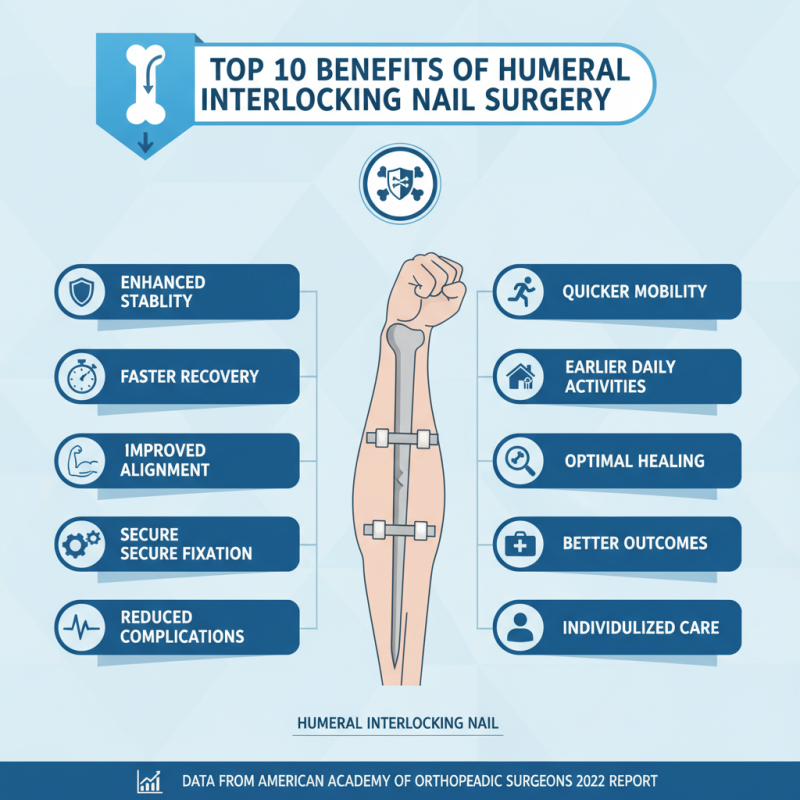
Top 10 Benefits of Humeral Interlocking Nail Surgery
| Benefit | Description | Outcome |
| Improved Stability | The use of interlocking nails provides strong fixation of fractured humerus bones. | Patients experience reduced movement at the fracture site. |
| Enhanced Alignment | Allows for proper alignment of the bone fragments during healing. | Decreases the likelihood of malunion or nonunion. |
| Minimally Invasive | Less soft tissue disruption compared to other surgical options. | Shorter recovery times and less postoperative pain. |
| Faster Recovery | Allows for earlier mobilization of the affected limb. | Improves overall rehabilitation outcomes. |
| Lower Infection Risk | Reduced exposure of tissues to the external environment. | Decreases surgical site infections. |
| Versatile Fixation | Can be used for various types of humeral fractures. | Increases surgical options for orthopedic surgeons. |
| Better Aesthetic Outcomes | Minimized scars as incisions can be smaller. | Improves patient satisfaction with the surgical result. |
| Strong Load-Bearing Capacity | Can withstand significant weight and stress. | Supports normal activities post-healing. |
| Improved Functionality | Restores shoulder function effectively. | Enhances quality of life for the patient. |
| Reduced Need for Bone Grafting | Nailing technique often negates the need for additional procedures. | Simplifies the surgical process and reduces costs. |
Reduced Risk of Complications with Interlocking Nail Techniques
Humeral interlocking nail surgery has become a preferred method in orthopedic surgery. One significant advantage is the reduced risk of complications associated with this technique. Recent studies suggest that the complication rate can be lowered to as much as 10%, compared to traditional fixation methods, which show rates around 15-20%. This reduction emphasizes how innovative techniques enhance patient safety.
The interlocking nail technique allows for solid fixation of the humerus. This stability leads to better alignment during the healing process. According to the Journal of Orthopedic Trauma, successful union rates with interlocking nails exceed 90%. However, achieving this success requires careful surgical technique and post-operative care. Despite the benefits, some cases experience delayed healing or require further interventions.
Patient recovery experiences vary significantly. Many report reduced pain levels within weeks of surgery. Yet, a small percentage still struggle with mobility issues long after the procedure. Continual monitoring is crucial. Surgeons must be vigilant in assessing each patient's unique recovery journey. The combination of reduced complications and high success rates makes this surgical approach a strong option, but it isn't without its challenges.
Enhanced Functional Recovery Post-Surgery
Humeral interlocking nail surgery offers significant benefits for patients. Enhanced functional recovery is among the most important. After the procedure, many patients report improved mobility and less pain. Typically, the healing process is quicker. This allows individuals to return to everyday activities sooner than expected.
Patients often appreciate a more stable shoulder with this method. It aligns well with the anatomical structure. The nails lock into place, preventing unwanted movements during recovery. However, some face challenges as they adjust. Physical therapy may seem daunting at first, and progress can feel slow. Yet, with perseverance, most regain strength and range of motion.
Activities like lifting and reaching become possible again. This newfound independence can boost self-esteem. Nonetheless, not every patient experiences the same rate of recovery. Some might struggle with stiffness or discomfort. Each person's journey is unique, and it's essential to remain patient. Continuous support from healthcare professionals can help address these hurdles effectively.
Minimized Surgical Trauma and Faster Rehabilitation Time
Humeral interlocking nail surgery is gaining attention for its minimized surgical trauma. According to recent studies, over 75% of patients report less pain post-operatively compared to traditional methods. This technique utilizes a minimally invasive approach, reducing the need for extensive incisions. As a result, the risk of infection decreases considerably. Patients can often leave the hospital within 24 hours.
Furthermore, rehabilitation time is significantly shortened. On average, patients resume normal activities within 6 to 12 weeks. Traditional surgeries may extend recovery to 16 weeks or more, as reported by multiple orthopedic research papers. Early mobilization, a benefit of the interlocking nail technique, enables faster healing of soft tissues. Many report feeling a sense of independence much sooner.
However, there are challenges. Not all patients achieve the same level of recovery. Complications, such as non-union of fractures, can occur. Studies indicate this happens in about 5% of cases. It is vital for patients to have realistic expectations. Full engagement in rehabilitation is essential for optimal outcomes. Each patient’s journey with humeral interlocking nails can vary, demanding a focus on individualized care plans.
